
Epic Attire: Festive Costumes of Yi, Miao & Zhuang Minorities in Yunnan
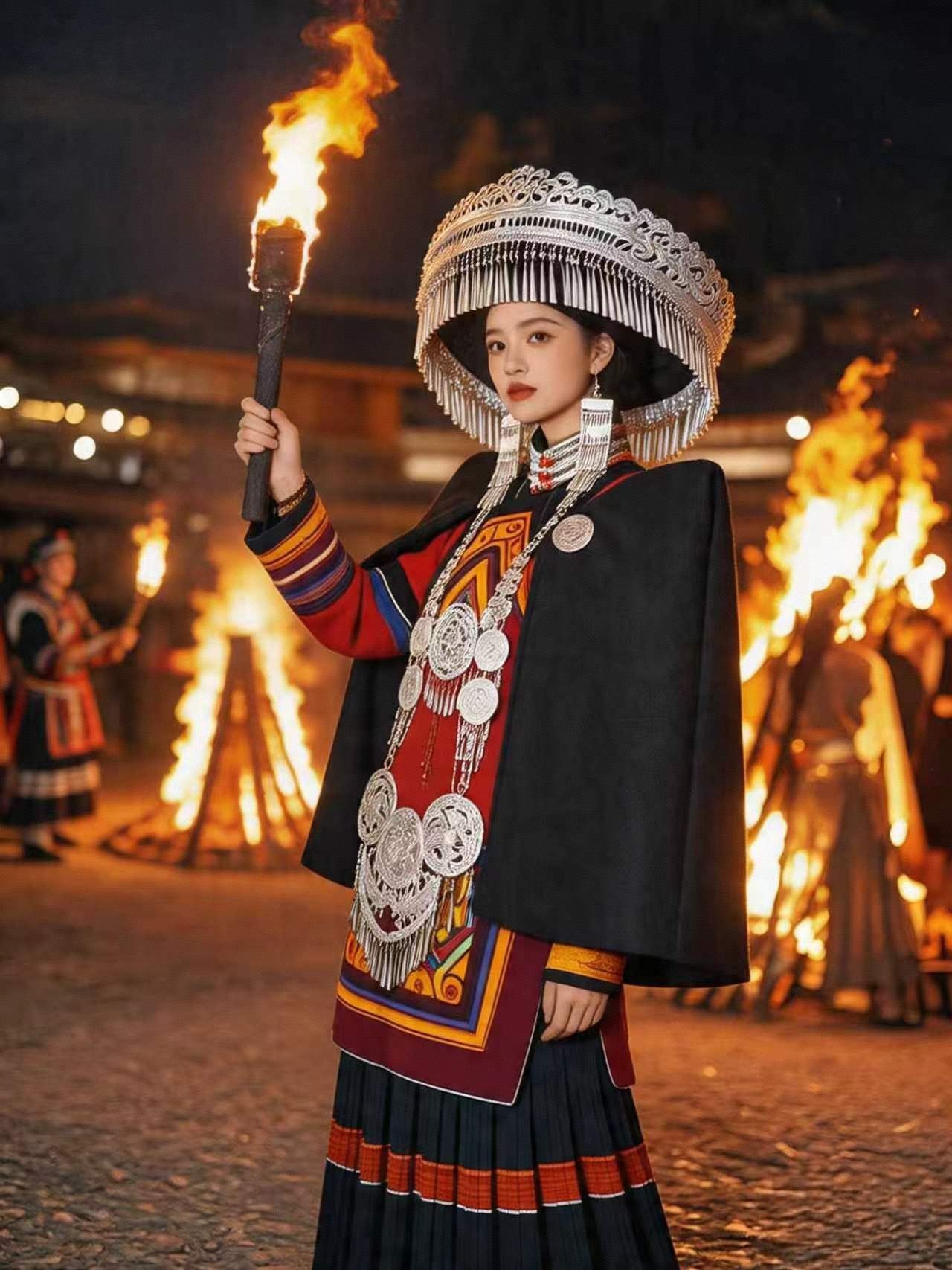
Yunnan is home to 25 ethnic minorities. Each group has a unique clothing culture. Festive costumes are more than just beautiful garments. They are walking epics, carrying history, beliefs, and identity. In this post, we dive into the most spectacular ceremonial attire of three major groups: the Yi, the Miao (Hmong), and the Zhuang.
Yi: The “Mountain Azalea” on the Runway
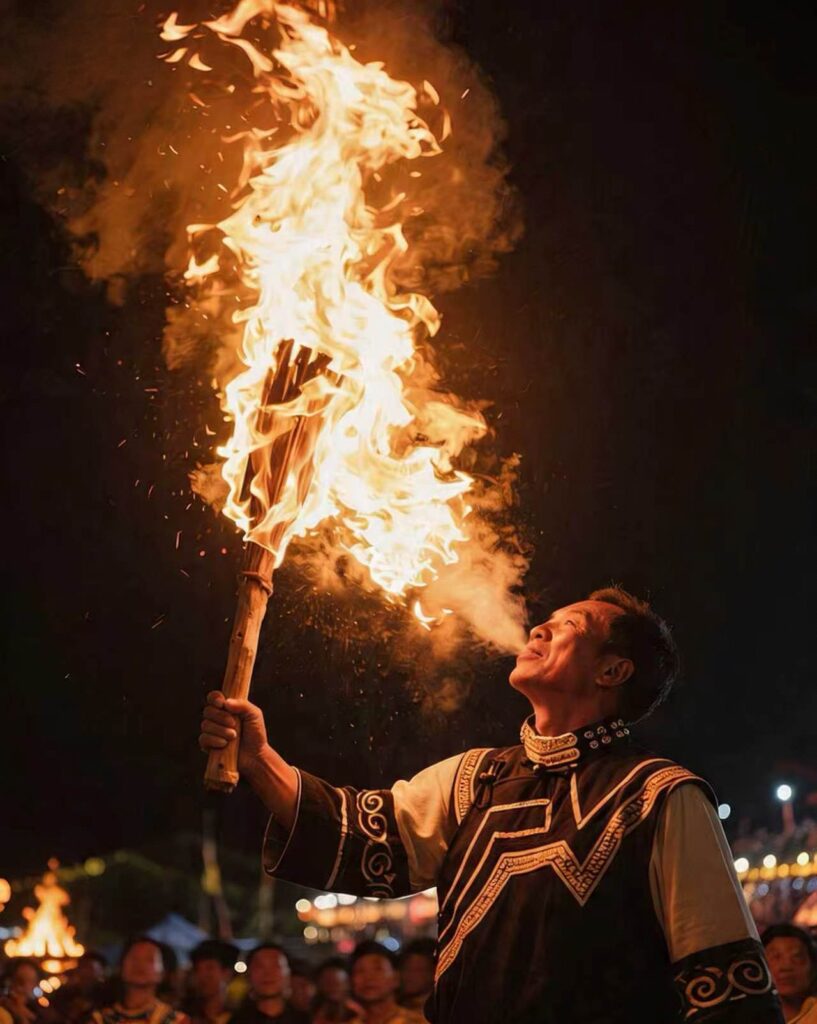
The Yi are the largest minority in Yunnan. Their festive costumes are famous for intricate embroidery, bold colors, and ornate silver ornaments. In the Yi heartland of Chuxiong, a woman’s full ceremonial dress is a true masterpiece.
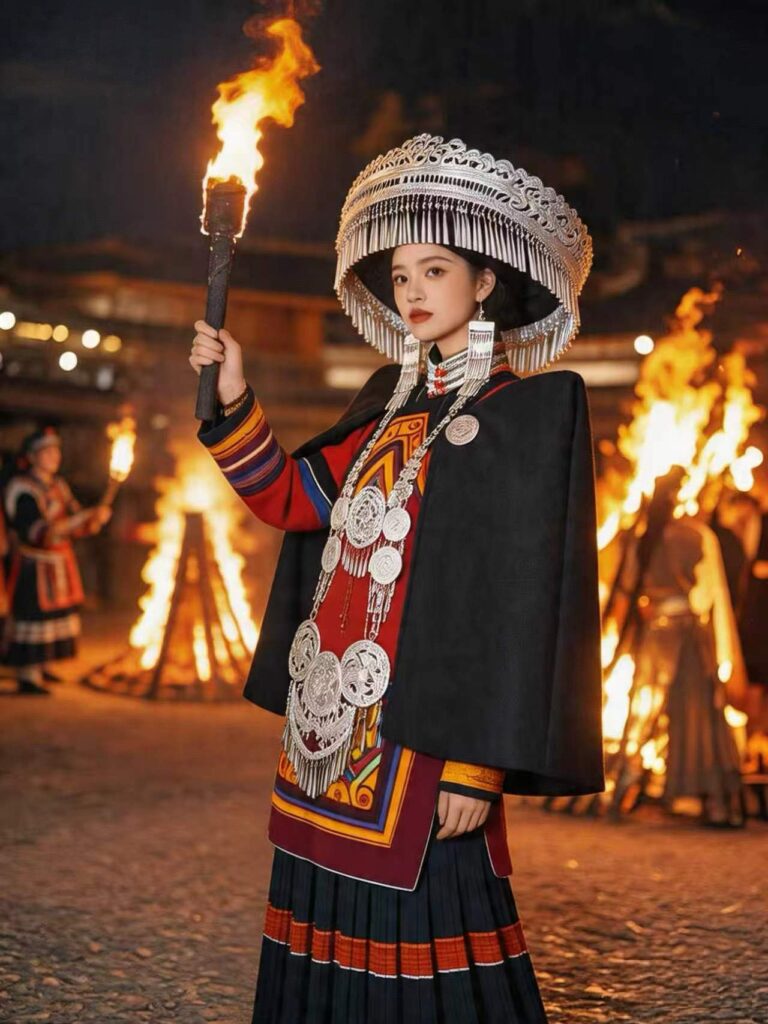
A Yi woman’s headdress is often a silver-studded “cockscomb” cap. Or it may be a towering silver-beaded hat, dangling with tiny bells and chains. Her long jacket is richly embroidered on the cuffs, collar, and front panels. Traditional motifs include torch flames, sun rays, and the mountain azalea (mǎ yīng huā). Three colors dominate Yi attire. Red stands for fire and passion. Yellow represents harvest and sunlight. Black symbolizes the earth and dignity. She wears a hand-stitched apron and a multi-layered pleated skirt. The skirt sways like blooming flowers when she walks. Yi men’s festive wear includes a hero’s knot (a tall wrapped turban), a black jacket with an embroidered vest, silver ornaments, and a long knife. It is bold and heroic.
The most iconic Yi event is the Sai Zhuang Festival (Costume Contest) in Yongren County. It has a history of over 1,350 years. It is often called “the world’s earliest rural fashion show.” Every year on the 15th day of the first lunar month, Yi people come down from the mountains. They wear their finest attire to compete in beauty and craftsmanship. Today, this tradition has gone global. Yi embroidery has appeared at China International Fashion Week. The local industry now generates over 1.1 billion yuan, employing tens of thousands of embroiderers.
Miao (Hmong): The Walking Silver Museum
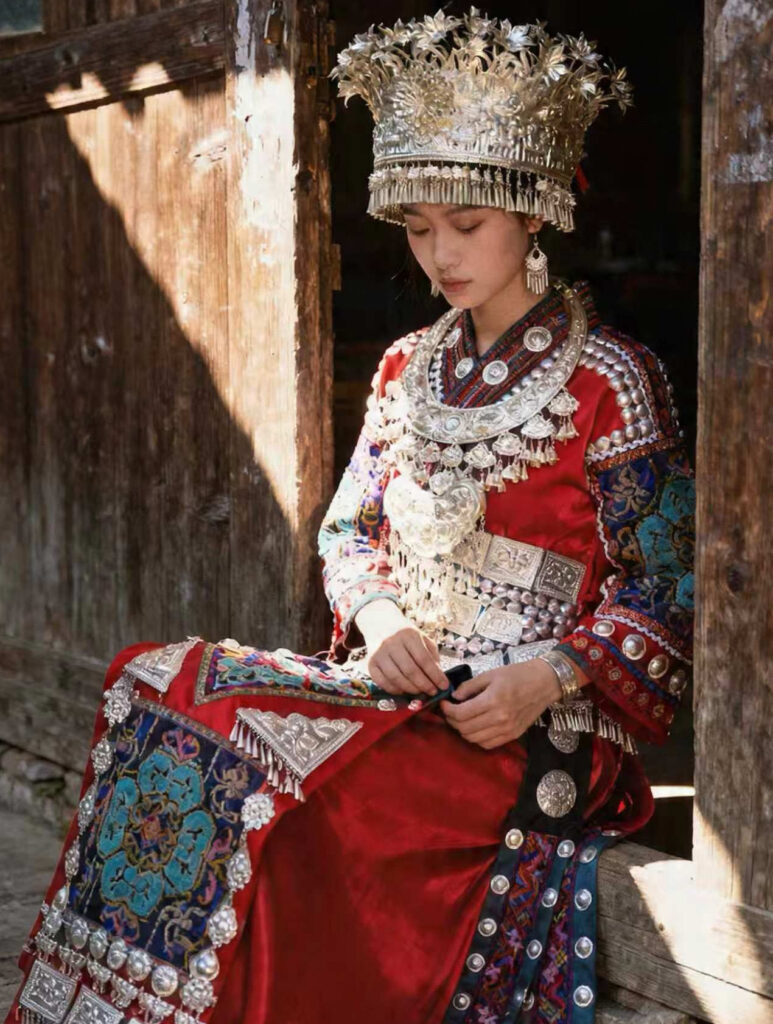
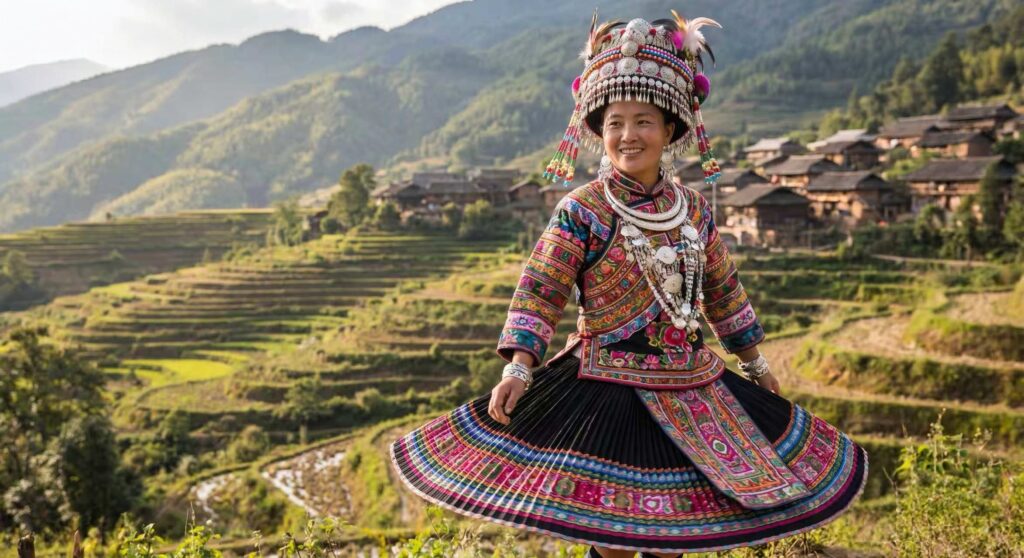
Among all ethnic costumes in China, the Miao’s festive dress is arguably the most lavish. It is nicknamed the “walking silver museum” — and for good reason. A complete Miao woman’s ceremonial outfit can weigh over 10 jin (about 5 kg). Most of that weight is pure silver.
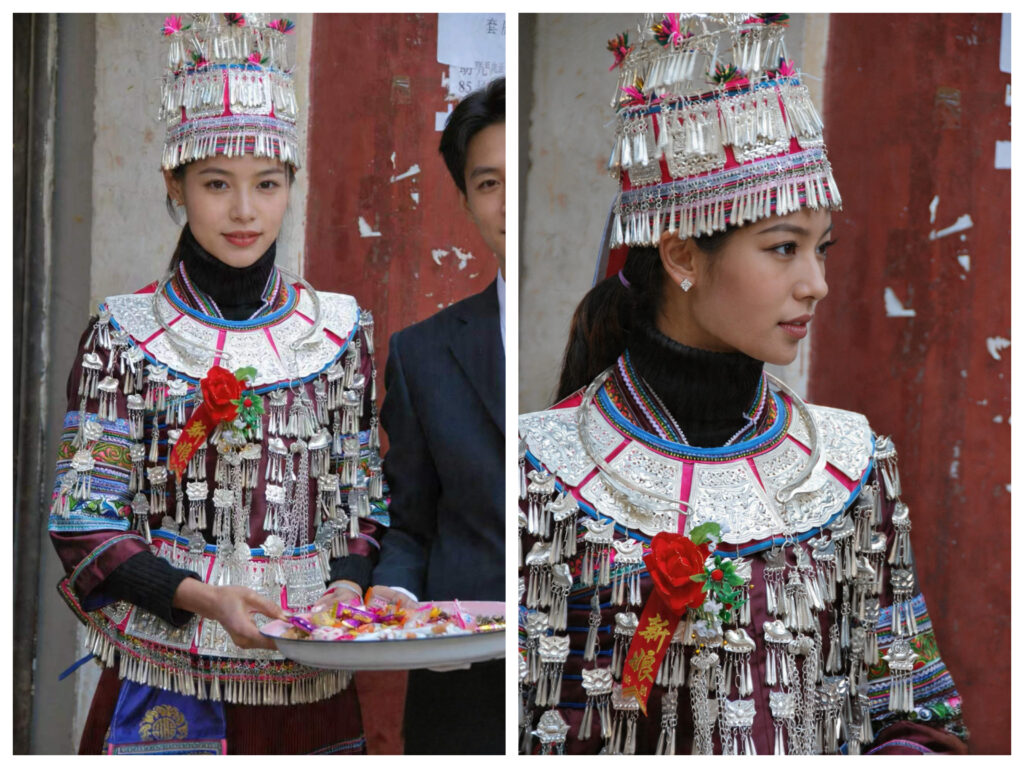
The centerpiece is the silver headdress. It features layers of silver flowers, birds, butterflies, and bells. It is topped with a pair of curved silver horns. These symbolize the ox horns of the legendary ancestor Chiyou. A sun or drum pattern is at the front. Every movement produces a delicate jingling sound. The jacket is dark blue or black. The sleeves, shoulders, and collars are completely covered in Miao embroidery. Artisans use five-colored silk threads. The embroidery depicts dragons, phoenixes, the Butterfly Mother (the mythical origin of the Miao people), mountains, and rivers. Each motif tells an ancient story. The pleated skirt is made of batik (wax-resist dyed cloth) in blue and white. Its patterns record the Miao’s long migration history.
In Yunnan’s Wenshan and Honghe prefectures, different Miao subgroups have distinct festive looks. These include the Flowery Miao, White Miao, and Blue Miao. They are named after the colors of their skirts and leggings. During the Huashan Festival (Flower Mountain Festival), Miao girls in full silver regalia become the most dazzling sight in the mountains. In 2006, Changning Miao costumes were inscribed on China’s first national list of intangible cultural heritage.
Zhuang: The “Three-Story” Silhouette Dyed in Indigo
The Zhuang are the second-largest minority in Yunnan. They mostly live in Wenshan. Unlike the fiery Yi or the silver-white Miao, Zhuang festive costumes are characterized by calm indigo blue. They also have a distinct layered silhouette, often called the “Three-Story” dress.
A Zhuang woman’s ceremonial outfit has three visible layers. The innermost layer is a white or light-blue long jacket that reaches the ankles. The middle layer is a black or dark-blue short vest that stops at the waist. The outermost layer is a wide black pleated skirt, plus an embroidered apron. Seen from the side, the three hemlines form a beautiful stepped profile, hence the name “Three-Story.” The collar, cuffs, and apron are embroidered with flowers, butterflies, and geometric patterns. The patterns use pink, bright green, and pale yellow. They pop vividly against the deep indigo background. Her head is wrapped in a silver-studded headscarf or a simple black cloth. It is adorned with silver hairpins, combs, and earrings. A silver necklace and a silver lock hang on her chest. The lock is a traditional talisman for safety and fortune.
Zhuang men’s festive wear is simpler. It consists of a black or dark-blue button-down jacket, wide-leg trousers, an embroidered belt, and embroidered shoes. The grandest festivals are Sanyuesan (March 3rd) and the Longduan Festival. At these events, everyone wears the “Three-Story” dress. They sing mountain duets, toss embroidered balls, and dance with handkerchiefs in the fields. The indigo dye comes from locally grown indigo plants. The entire process—from planting and dye-making to weaving and embroidering—has been passed down for generations. It is now listed as provincial intangible heritage.
A New Life for Ancient Costumes
Today, these centuries-old costumes are finding new life. Yi embroidery has walked the runway at China International Fashion Week. Miao silverwork inspires contemporary designers. Young Zhuang entrepreneurs are creating “national chic” (guochao) clothing. These designs are adapted from the “Three-Story” dress for daily wear. More and more young people are returning to their villages. Zhuang designer Wei Shuting is one example. They turn traditional craftsmanship into cultural brands.
Yet the road is not without challenges. “If the elders stop teaching, the children stop learning, and the young stop wearing, our costumes will slowly disappear,” an elderly Miao woman once said. Protecting this living heritage requires the efforts of each new generation.
From remote mountain costume contests to international fashion runways, the festive attire of the Yi, Miao, and Zhuang continues to tell beautiful and moving stories to the world. As one saying goes: “Ethnic festive costumes are not only the core of Yunnan’s intangible cultural heritage but also a cultural bridge connecting history and the future, ethnicity and the world.”
All images are for illustration purposes. If you’d like to feature authentic costume photos on your website, consider sourcing from cultural heritage archives or commissioning original photography.