
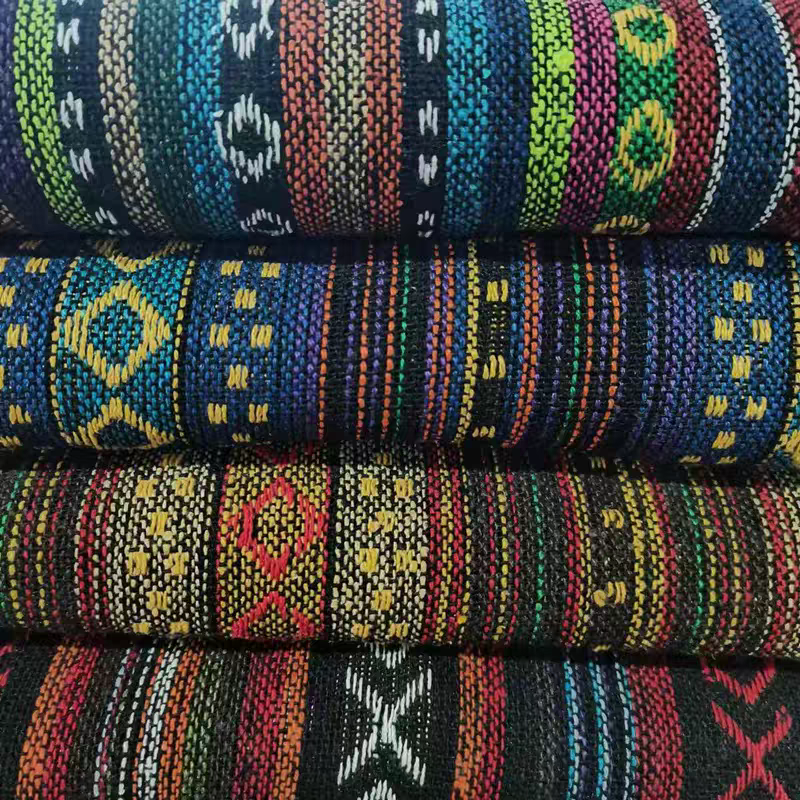
Alongside Yunjin, Shujin, and Songjin, Zhuang brocade stands as one of China’s four great traditional brocades.
It is the only one crafted by an ethnic minority.
Its story began in the Qin and Han dynasties.
It was refined in the Tang and Song dynasties.
It flourished in the Ming and Qing dynasties.
This exquisite textile carries over two thousand years of history.
In 2006, the weaving techniques of Zhuang brocade were officially inscribed on China’s national list of intangible cultural heritage.
This cements its status as a precious cultural treasure.
A Heritage Woven Through Time
Historical records trace Zhuang brocade’s roots back to the Han dynasty.
The ancestors of the Zhuang people were already weaving “five-colored patterned cloth.”
Fragments of brocade unearthed from the Han-era Luobowan tombs in Guangxi confirm this.
Weaving thrived in the region more than 2,000 years ago.
This laid the foundation for the craft’s long evolution.
By the Song dynasty, Zhuang brocade had reached full maturity.
It became a tribute to the imperial court, admired for its craftsmanship.
In the Qing dynasty, its fame spread nationwide.
Historical accounts note that “high officials and wealthy merchants vied to buy it.”
This made it a symbol of elegance and status.
Unfortunately, with the rise of modern textile industries in the early 20th century, the traditional craft fell into decline.
It even neared extinction, as machine-made fabrics replaced hand-woven pieces.
The Artisan’s Touch: “An Inch of Brocade, an Inch of Gold”
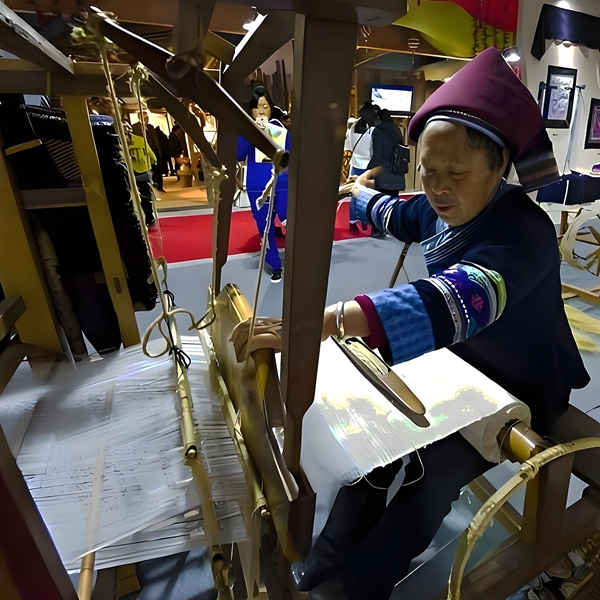
Zhuang brocade is crafted with cotton yarn as the warp and colored silk threads as the weft.
It uses a unique technique called “warp through, weft cut.”
The loom used is known as the “bamboo-cage loom.”
It is exclusive to this craft, embodying the ingenuity of Zhuang weavers.
The most intricate step in the weaving process is “patterning with bamboo sticks.”
This is a kind of “pattern code” where weavers rely on oral formulas passed down through generations.
They also use their own spatial memory to create complex, symmetrical designs.
A skilled weaver may take three full days to produce just one meter of brocade.
For highly detailed patterns, that number drops to a mere ten centimeters per day.
It’s no wonder there’s an old saying in the Zhuang community: “An inch of brocade is worth an inch of gold.”
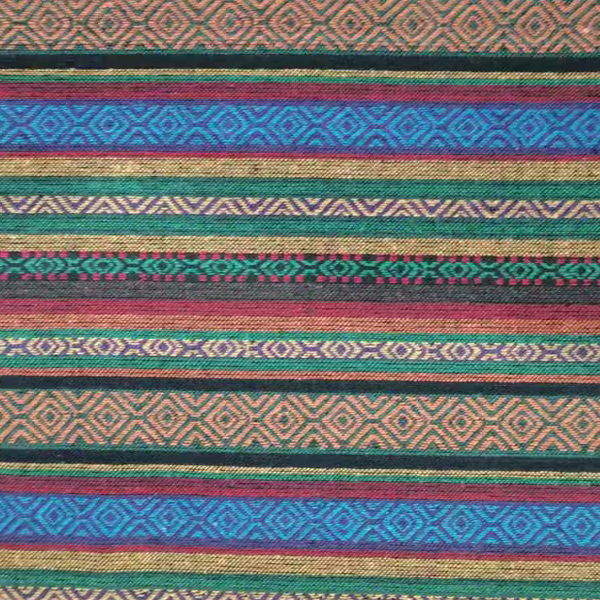
Adding to its uniqueness, the dyes used for Zhuang brocade are all natural.
They include cinnabar, indigo, turmeric, plant ash, and tree bark.
These humble, earth-sourced materials give the brocade its rich, deep, and long-lasting colors.
These hues reflect the land and culture of the Zhuang people.
Patterns and Colors: A Visual Language of the Zhuang Soul
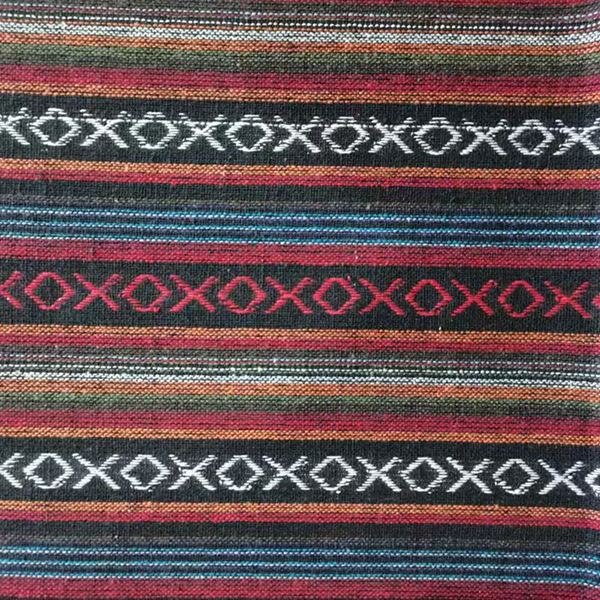
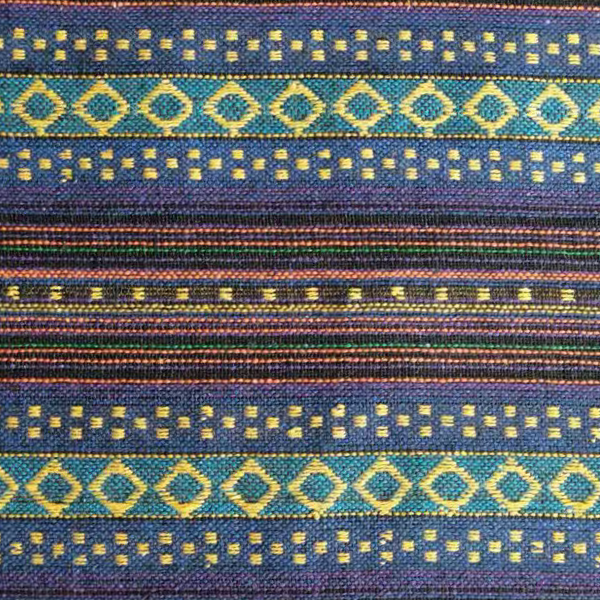
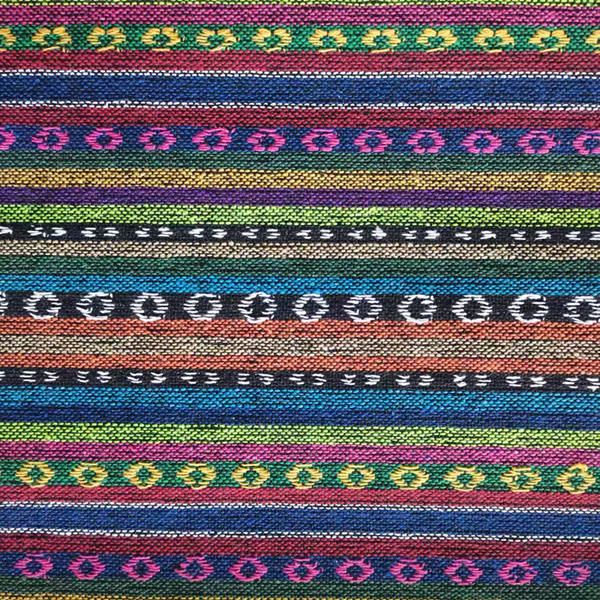
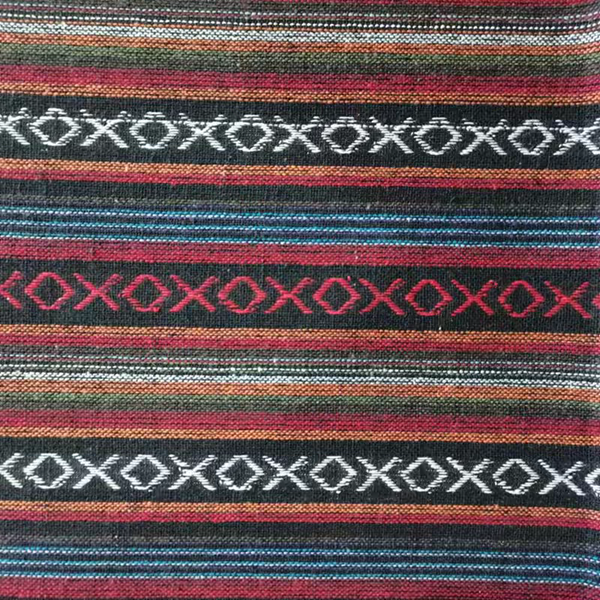
Zhuang brocade is renowned for its bold geometric patterns.
These are often paired with animal and plant motifs that carry deep cultural meaning.
The most iconic design is the “eight-petal flower.”
Other popular patterns include drum patterns and phoenix motifs.
Drum patterns are inspired by ancient Zhuang bronze drums.
These symbols are more than decorative.
They express the Zhuang people’s reverence for nature.
They show their respect for their ancestors.
They also represent their hopes for a happy, prosperous life.
In terms of color, Zhuang brocade is dominated by bright, contrasting hues.
These include red, yellow, blue, and green.
This vivid palette is a reflection of the Zhuang people’s open, warm, and spirited character.
Each piece of brocade is a vibrant expression of their culture.
A Legend Woven in Silk
Among the Zhuang people, there is a beloved folktale called A Piece of Zhuang Brocade.
It has been passed down for generations.
The story goes like this: An old woman weaves a magnificent brocade depicting a beautiful land.
But fairies take it away, leaving her heartbroken.
Her third son is brave and determined.
He embarks on a perilous journey to retrieve the brocade.
He crosses a mountain of fire and a vast sea.
When he returns home, the brocade magically transforms into a real, lush land.
The fairy who secretly wove her own image into the fabric becomes his wife.
This tale celebrates the weaver’s skill and the beauty of Zhuang brocade.
It also embodies the Zhuang people’s courage to pursue their dreams.
It has introduced countless people to the magic of this ancient craft.
New Life in the Modern Era
The 21st century has brought a remarkable revival of Zhuang brocade.
This is thanks to the efforts of dedicated artisans and innovators.
Master Tan Xiangguang began weaving at 17.
She has devoted over 50 years to the craft.
She advocates the philosophy that “use is the best form of preservation.”
She has created modern products, including bags, clothing, and accessories.
These blend traditional Zhuang brocade patterns with contemporary design.
This makes the craft relevant to modern life.
Another inheritor, Lan Peiwen, launched a “company + training + weavers” model.
This model has helped more than 1,400 rural women.
They earn a stable income by weaving Zhuang brocade from home.
The program empowers local communities.
It also preserves the craft at the same time.
In 2025, a national standard for Zhuang brocade officially took effect.
It is the first of its kind for any ethnic minority textile in China.
This marks a new chapter of quality and standardization for the craft.
That same year, Zhuang brocade made a stunning appearance at China International Fashion Week.
Ancient motifs met modern catwalks there.
The event showcased the craft’s timeless appeal to a global audience.
Today, under the “new Zhuang brocade, new national chic” initiative, more than 20,000 products have been developed.
These range from garments to home decor.
The industry generates millions of yuan in annual sales.
It has created over 120 local jobs.
This proves that intangible cultural heritage can be a powerful driver of rural revitalization and cultural prosperity.
Weaving the Future
Zhuang brocade is more than just a weaving craft.
It is a living piece of history.
It is a fabric that has traveled from Han-dynasty tombs to global fashion runways.
In every crossed thread — warp and weft — lies the wisdom, emotion, and dreams of the Zhuang people.
For over two thousand years, it has told their story.
Today, that thousand-year tale is being woven into an even brighter, more vibrant future.